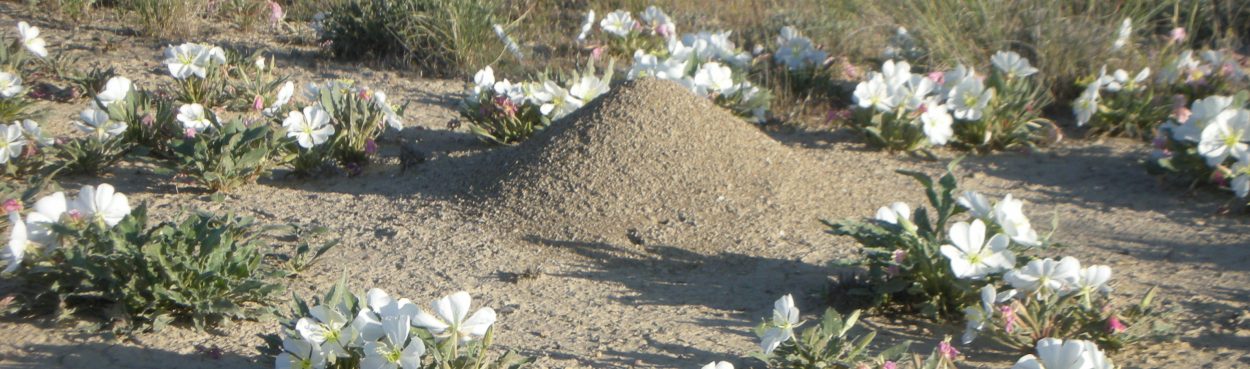
The North Fruita Desert is adobe badlands between the Highline Canal and the Bookcliffs. There are rolling hills composed of Mancos Shale derived clay. Larger shrubs are found in washes with smaller stature vegetation found throughout. The native vegetation is dominated by chenopods, composites and grasses. Some of the most obvious vegetation are chenopods (various species of saltbush and greasewood) as well as sagebrush (which is a composite). Let’s take a look at the main vegetation that you would see while traveling into this desert. If you want to identify a particular plant or flower, or to see larger photos, please check out the plant gallery.
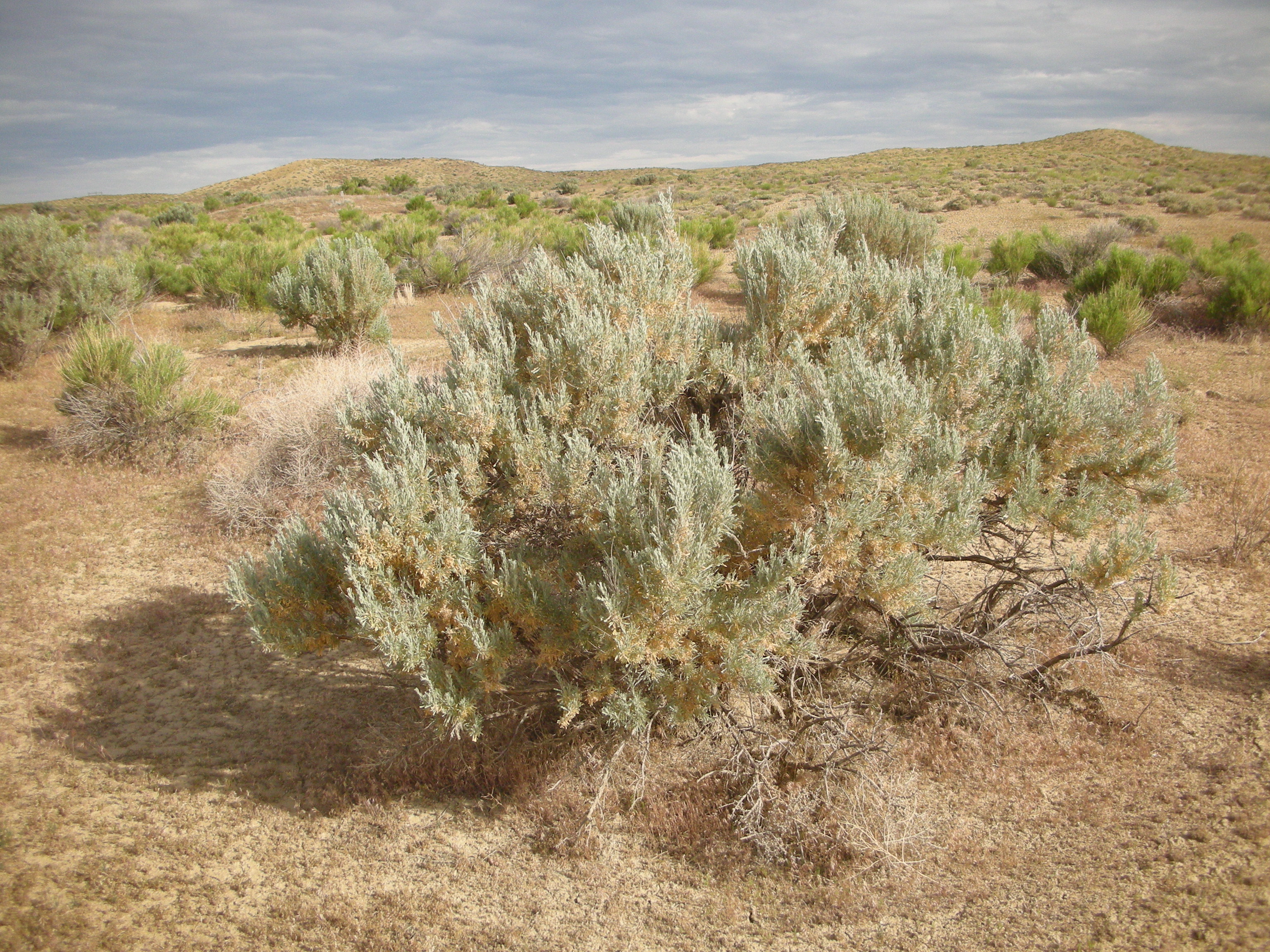
In driving or riding through the desert the most obvious features are the four large woody shrubs: sagebrush, rabbitbrush, greasewood and four-winged saltbush. They can all reach about 8 ft tall and are usually found along washes. Sagebrush has inconspicuous flowers during the summer. It has small, broad leaves with three lobes at the tip that have the familiar sagebrush smell when crushed.
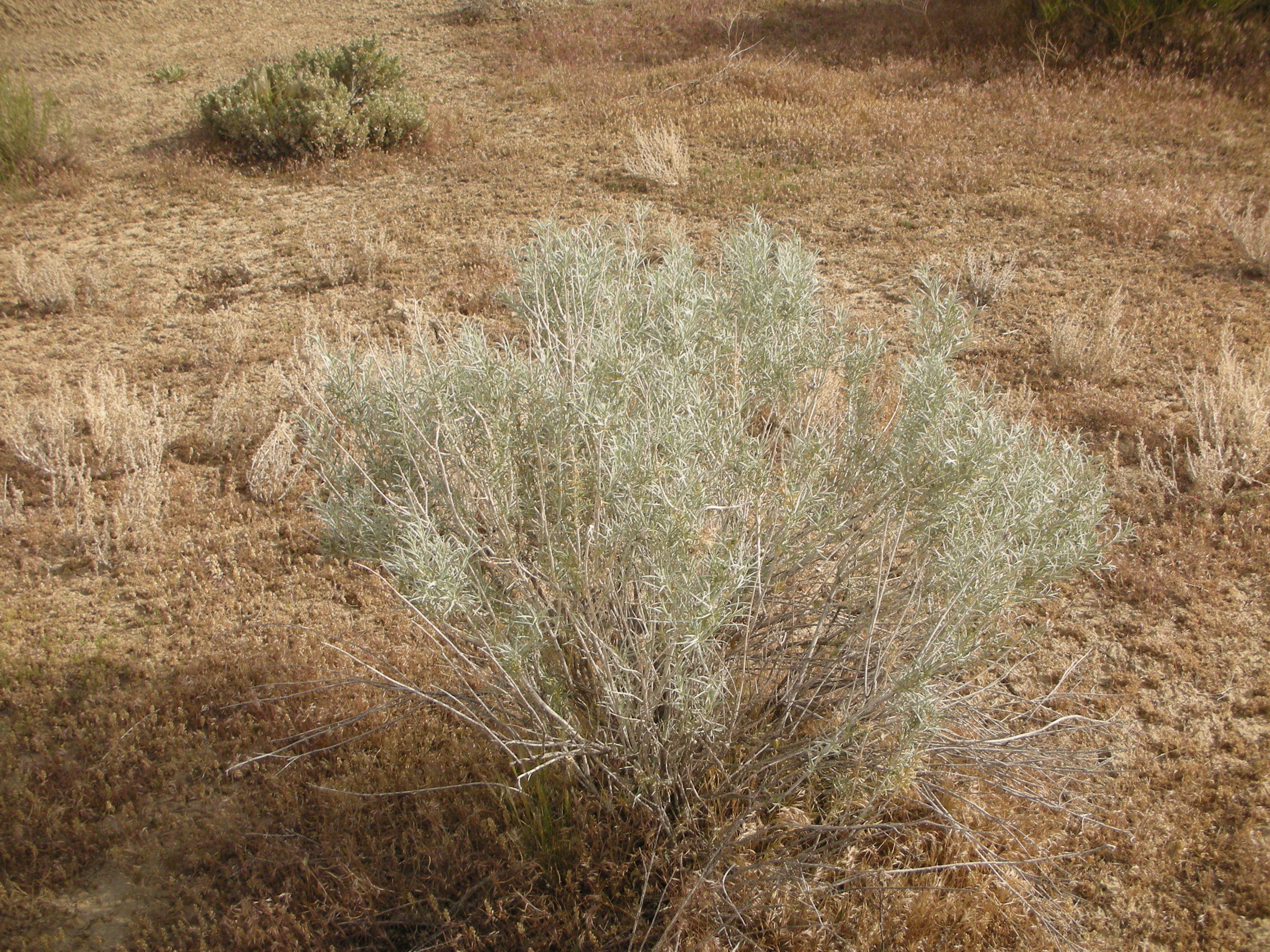
Rabbitbrush is also found in washes and on roadsides (these larger shrubs are often found in deeper soil in washes), and occurs in both a green and a grey leaved form. It has striking yellow flowers in the late summer and fall. Both forms have thin, straplike leaves.
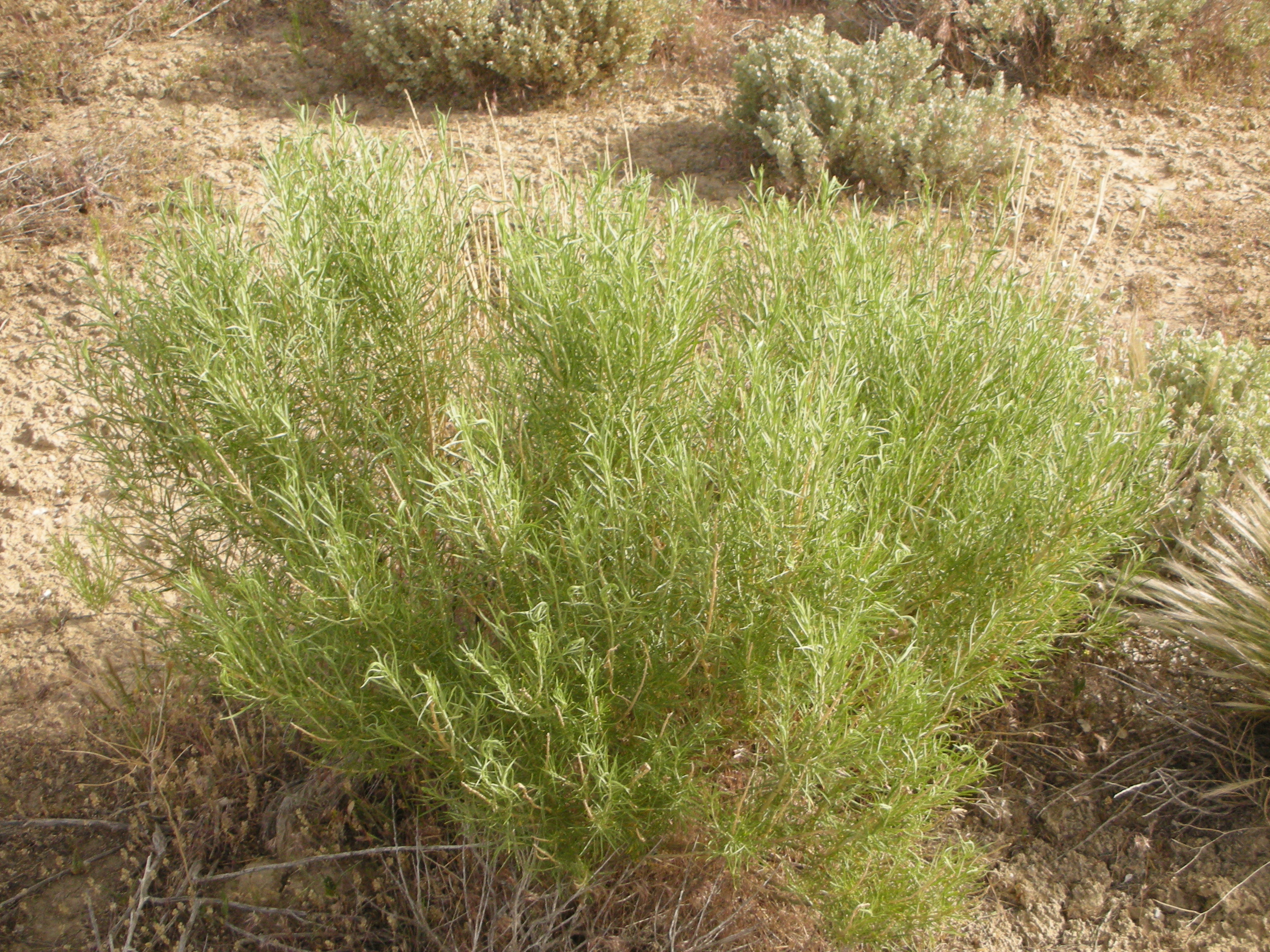
Green form
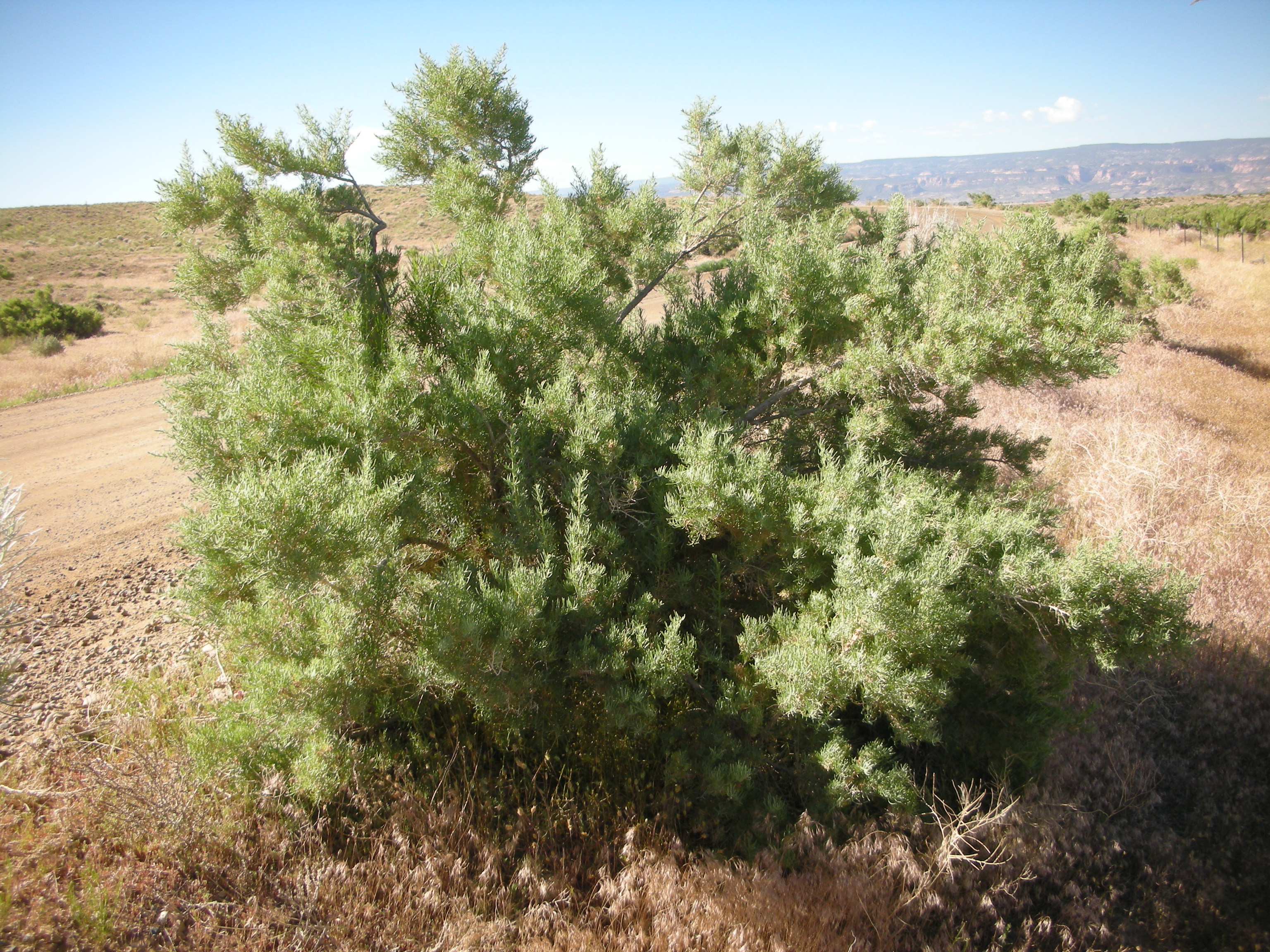
The most widespread larger woody shrub is greasewood, a chenopod that can form broad expanses of near monocultures. It has inconspicuous flowers, like most chenopods, with thin, round leaves.
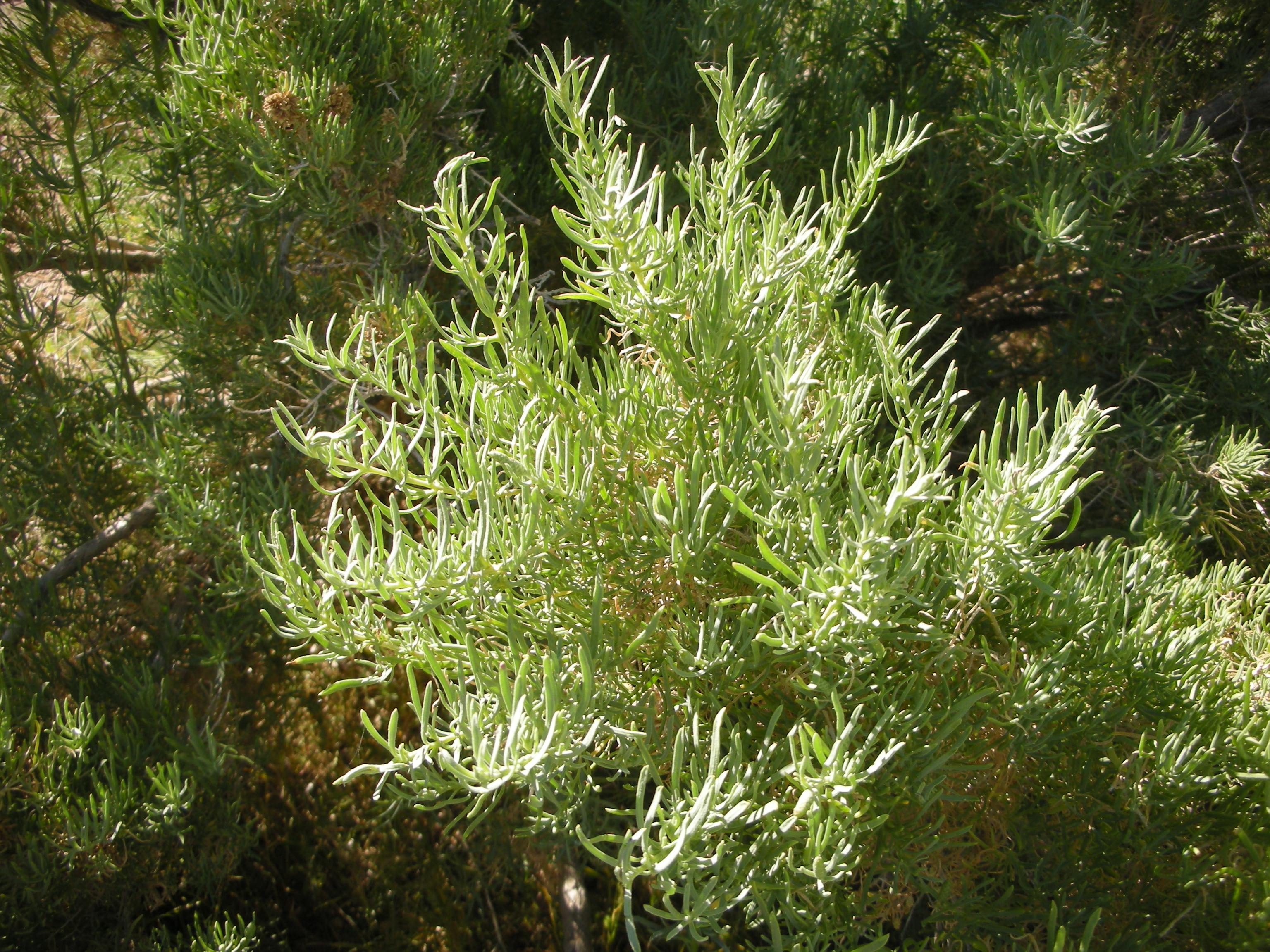
Close-up of leaves of greasewood
The last of the big four woody shrubs is the Four-winged Saltbush. It is probably the least common. It has gray-green leaves and produces a spike of small, inconspicuous flowers during the summer. The seeds are large and have four thin woody wings extending from them. The seeds and dead branches persist for some time on the plant.

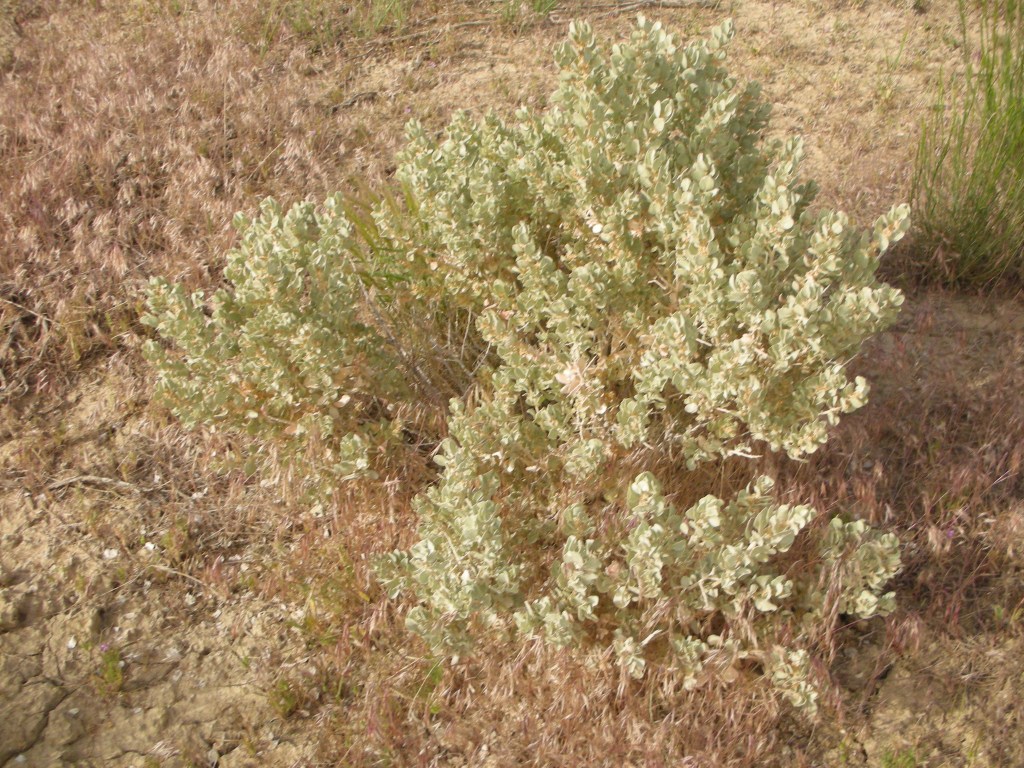
Most of the conspicuous vegetation that is not in washes, are grasses (see below) and shrubby composites and chenopods. The physical characteristics of the habitat have a great influence on the plants that you see. The vegetation will be different on hillsides versus flat areas or on north-facing versus south-facing slopes. These are some of the most common shrubs.
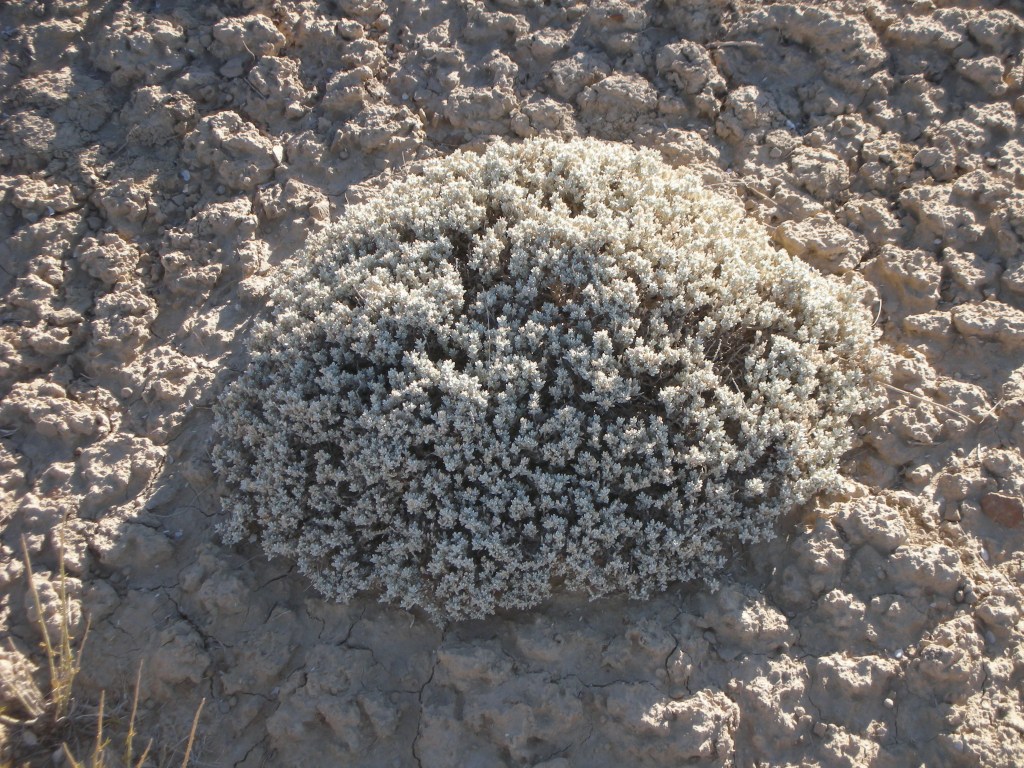
The first few species are chenopods (in the goosefoot family). Some of them are called saltbush. This refers to their ability to sequester salt in their leaves. This salt can deter herbivores, but it also makes their foliage desirable to plant eaters–at least in moderate quantities.
Mat saltbush (Atriplex corrugata). This is the blue-gray saltbush that frequently forms monocultures (it is the only species in an area). It is one of the most drought tolerant plants and you often see it on south facing slopes.
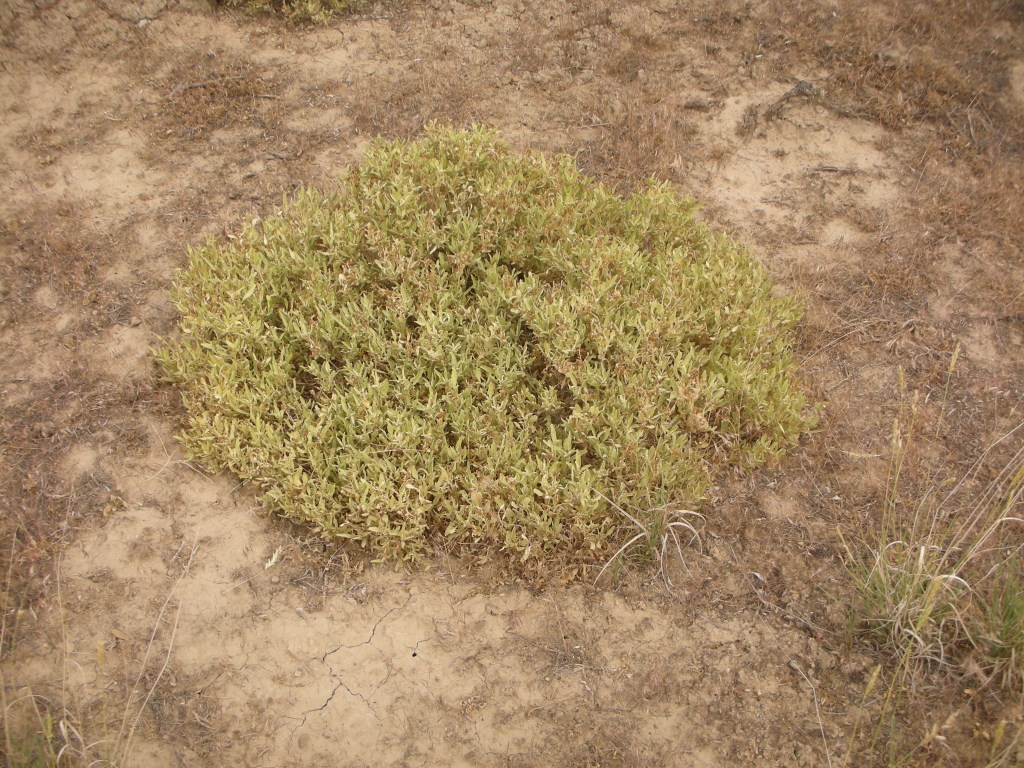
Gardner’s saltbush (Atriplex gardneri). A close relative of mat saltbush. It has olive green leaves It is often found in similar areas to mat saltbush. It is not as likely to form single species stands as mat saltbush.
Gardner’s saltbush occasionally, and mat saltbush commonly form rings. As the saltbush reaches large size after many years, the middle part of the plant dies off, leaving a ring of living plant. The individual parts of the rings eventually become separate plants and you can find rings of saltbush plants 3-4 meters across.
This is shadscale, Atriplex confertifolia
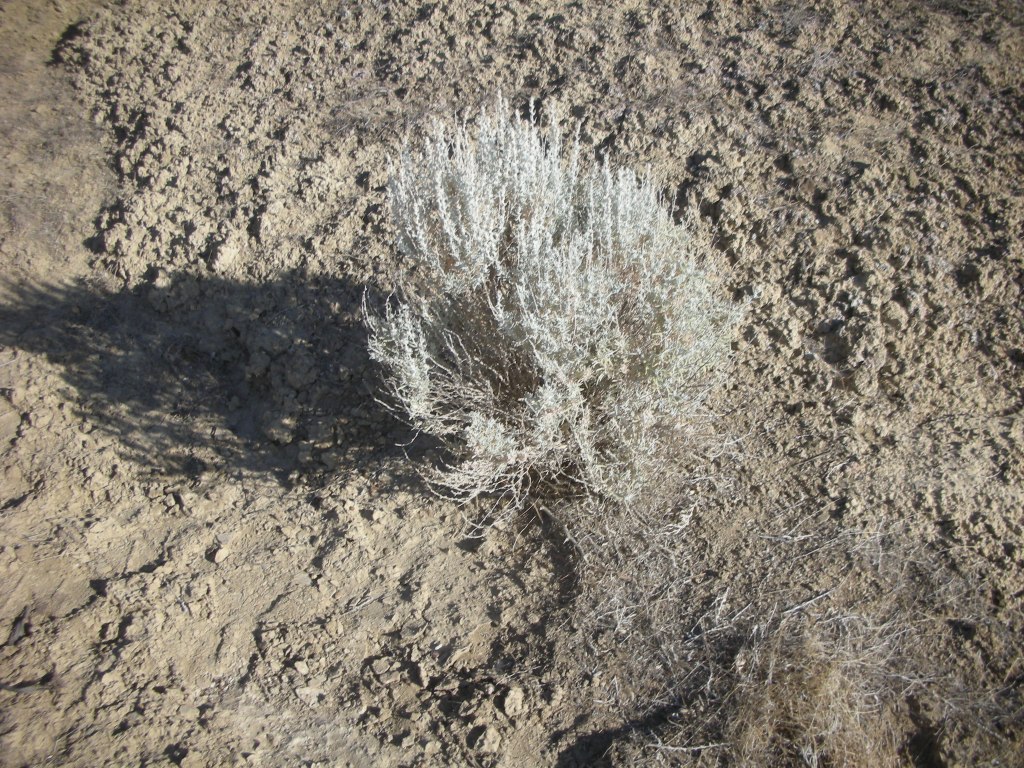
The last of the common chenopods is Winterfat (Krascheninnikovia lanata). This species forms conspicuous areas of high density and is often found on hilltops. It has a wooly gray appearance. It is called winterfat because the leaves actually have a high fat content that makes good winter forage for native herbivores.
 Cole - Wiernasz Lab