This is a link to a YouTube recording of a talk entitled: Life and Death in the Desert: How Diversity Facilitates Success in the Western Harvester Ant that we gave at the Prescott Natural History Institute. It goes into a fair bit of detail about the life history and biology of the Western Harvester Ant.
Pogonomyrmex occidentalis, the western harvester ant is one of the most common and conspicuous ants of western N. America. It is found from Arizona into Canada and from Nevada to Kansas. It is well known for its nest cones that are the above ground portion of the nest that extends several meters below the surface. Mature colonies can have as many as 25,000 workers, although they begin with a single queen. Mature colonies produce winged queens and males during the spring and summer and these reproductives fly from the colony after summer rains. The queens and males fly to hilltops to mate. The queens mate with a number of males, stores the sperm and then flies away from the hilltop and founds the colony. The males die on the hilltop over the next several days.
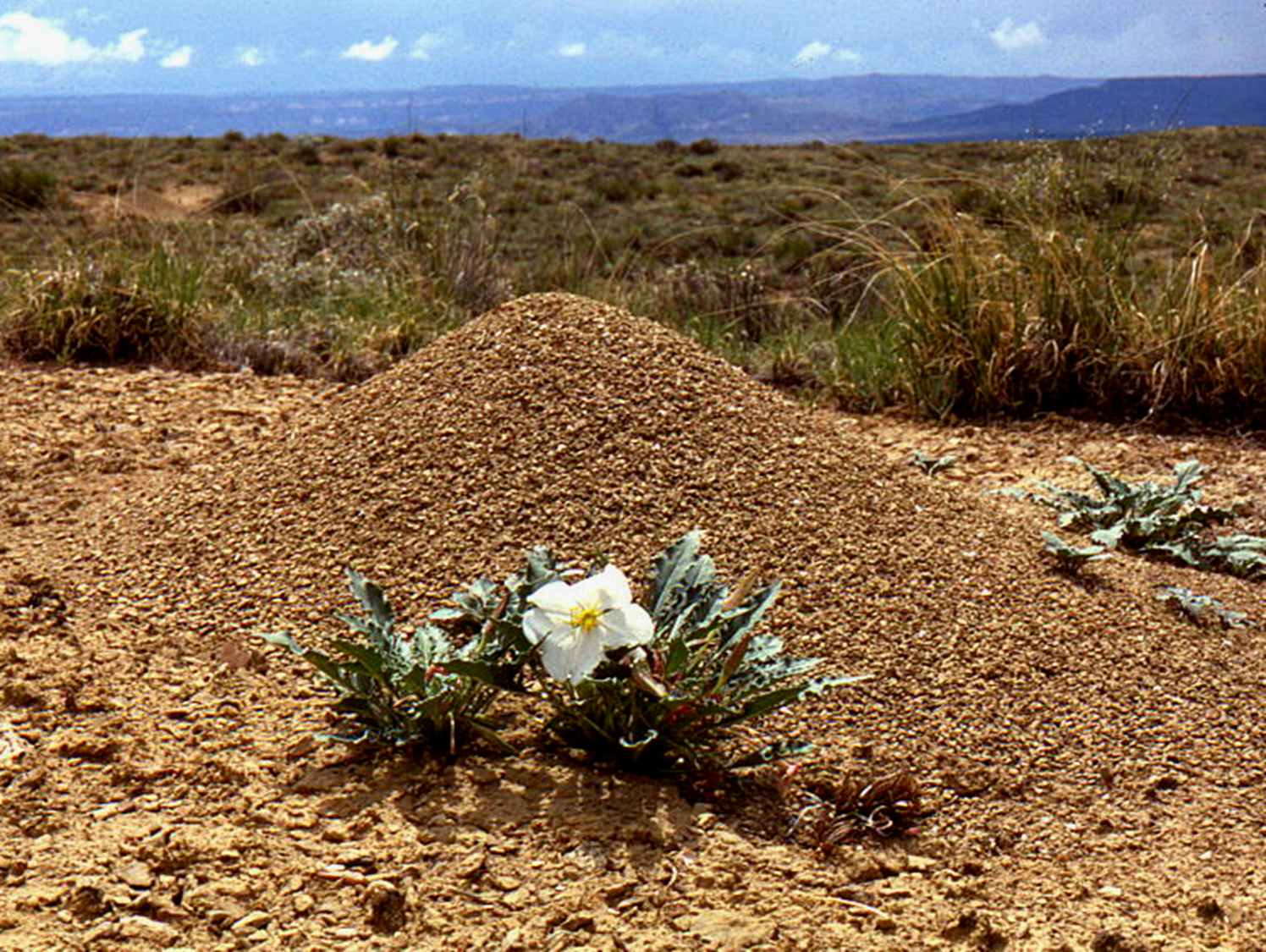
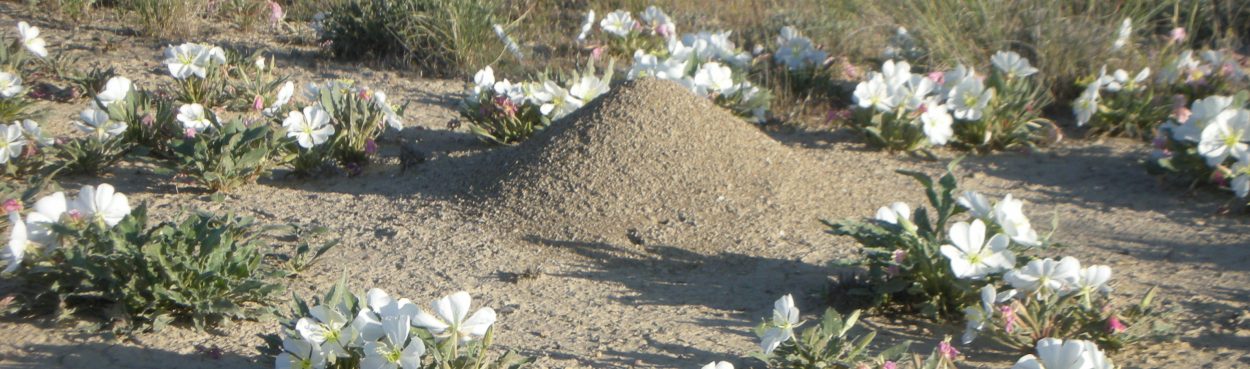
A mature harvester ant colony. The mounds are approximately elliptical in area with a cone that is often offset to the north and west. This makes the south-eastern slope the longest of the nest, and this is often where the nest entrance is.
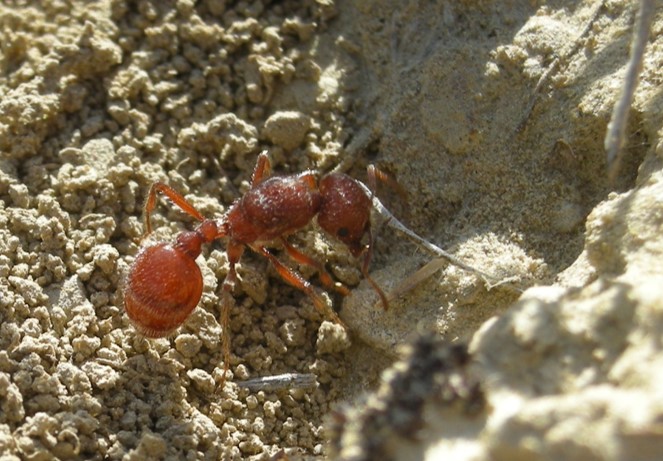
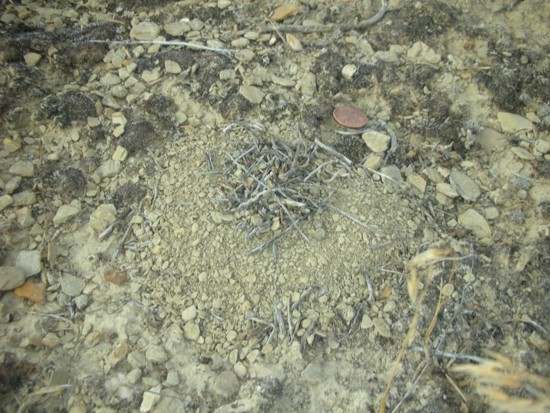
When the queen reaches a chosen nest site, she digs into the soil. It is critical for her to get below the surface before the summer sun kills her. She digs more than a meter within the first few days. She will leave the nest to forage during this time of colony founding. She may travel tens of meters on the surface looking for seeds or insects to bring back underground. For two weeks after the mating flight, it is common to see queens foraging. The first workers are produced in about one month and then the nanitics (the very small first workers) are often seen.
Colonies show enormous variation in growth rate, with some colonies reaching a size capable of reproduction within 5 years, while others may require more than 20 years to reach reproductive size. In any event the queen can live for more than 40 years, using sperm that she stored from the mating flight decades earlier.

The Western Harvester Ant is a seed harvester, bringing seeds of numerous species of plants back to the nest. They rely particularly on seeds from spring flowering annuals and perennial plants for the resources to reproduce. They are not a complete seed specialist, however. They will collect insects, usually dead or dying ones and this can make up a substantial part of their diet at certain times.
 Cole - Wiernasz Lab